Deciphering Fitzpatrick Skin Types: Why Western Skincare Advice Fails in the Tropics
Dr. S on 6/17/2026
Every week, another elegant bottle arrives from an international courier. It contains a cult-favorite chemical exfoliant or a high-percentage vitamin C serum that worked miracles for an influencer in London or Seoul. You apply it diligently, expecting that same glass-skin clarity. Instead, within a fortnight, your complexion looks patchier, darker, and more irritated than when you started.
This is the hidden tax of relying on skincare advice built for a completely different genetic and geographic reality. Your skin is not failing the product. The product is failing the biological reality of your skin type in an environment that never stops testing it.
Find your skin type
Dermatologists classify human skin using a classification system called the Fitzpatrick scale, which ranges from Type I to Type VI. This scale does not just measure the shade of your complexion. It predicts how your cells respond to UV radiation, injury, and inflammation. Most people of South Asian descent fall between Type III and Type VI.
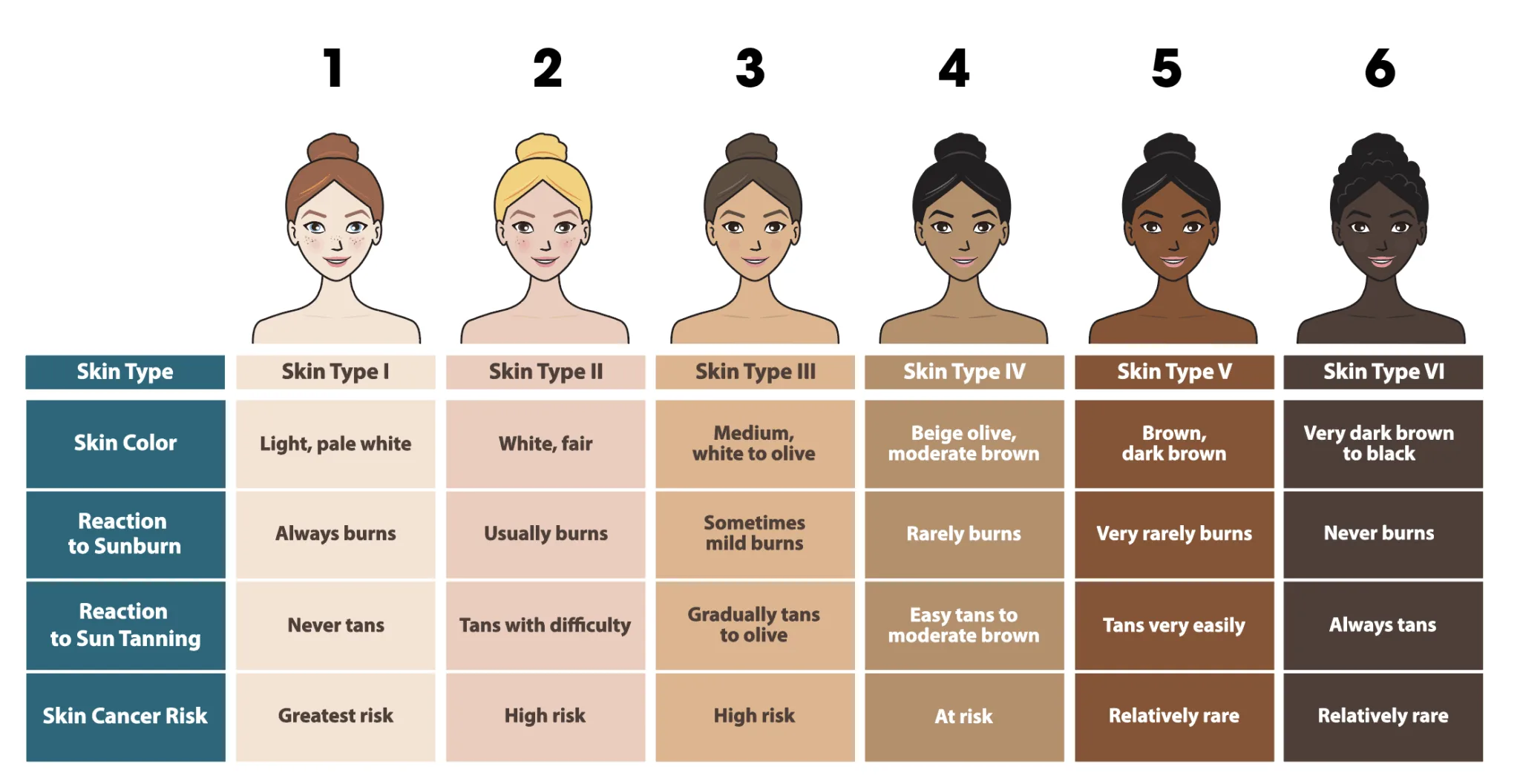
At the microscopic level, the defining characteristic of these skin types is not the number of pigment-producing cells you have. Everyone has roughly the same amount of melanocytes. The difference lies in the size and distribution of the tiny packages of pigment, known as melanosomes, that are produced by these cells. In darker skin types, these packages are larger, more numerous, and distributed widely throughout the upper layers of the skin. They act as a highly efficient, built-in shield against ultraviolet radiation.
When your skin functions normally, this system is a powerful defense mechanism. However, those same highly active pigment factories are incredibly sensitive. Any time your skin experiences stress—whether that is a scratch, a breakout, or the microscopic irritation caused by an overly aggressive facial scrub—your cells treat it as an emergency. The melanocytes go into overdrive, pumping out excess pigment to protect the injured area. This sudden flood of dark pigment creates that stubborn darkening left behind after an inflammation or injury clears, which dermatologists call post-inflammatory hyperpigmentation.
Why is this important
Living in a tropical climate where the UV index frequently climbs to extreme levels changes the biological rules entirely. When you introduce popular active ingredients like glycolic acid or high-strength retinoids, you are purposefully creating mild, controlled irritation to speed up cell turnover. In a temperate climate with low UV exposure, the skin can repair this minor disruption without much drama.
In a high-UV, high-humidity environment, the equation flips. That microscopic irritation signals your hyper-reactive pigment cells to begin defense operations. At the same time, the humidity causes your skin to sweat and produce more oil, which can trap impurities and alter how topically applied products penetrate. An acid that dries cleanly and exfoliates gently in a European winter stays wet and active on your skin here, increasing its potency and its potential to irritate.
If you step outside into intense sunlight even forty-eight hours after using an aggressive exfoliant, the UV rays hit cells that are already inflamed and structurally vulnerable. The result is a double wave of pigment production. The sun triggers standard tanning, while the internal inflammation triggers localized hyperpigmentation. This explains why standard brightening routines often leave local skin looking muddy or uneven rather than radiant. The ingredient itself is rarely the enemy. The trigger is the invisible cascade of cellular stress caused by combining aggressive formulas with an uncompromising climate.
How to not get burned
Navigating the local skincare market requires the skepticism of an investigator. The shelves are packed with unbranded whitening creams, unauthorized imports, and salon treatments that promise rapid transformations. To protect your cellular health, you must know how to audit what you buy and where you go. Read more about finding genuine products and qualified practitioners in our blog post.
If a salon or clinic offers a standard chemical peel without asking about your sun exposure over the past two weeks, or if they fail to insist on strict post-treatment sun protection, do not let them touch your face. They are practicing standard protocols where specialized, cautious care is mandatory.
Different brightening options
Choosing the right approach requires matching the ingredient behavior to both your pigment profile and the climate. The table below outlines how common options perform under tropical conditions on darker skin types.
| Ingredient / Treatment | Primary Mechanism | Fitzpatrick III–VI Performance | Climate Compatibility |
|---|---|---|---|
| Alpha Arbutin (1% - 2%) | Slows down the enzyme that triggers pigment production. | Excellent. Fades spots gently without causing widespread inflammation. | High. Stable in humid conditions and does not increase sun sensitivity. |
| Glycolic Acid (Over 5%) | Dissolves the glue holding dead surface cells together. | Risky. High risk of triggering reactive hyperpigmentation if misapplied. | Low. Increased UV sensitivity makes it dangerous in high-UV index zones. |
| Cysteamine Cream (5%) | Interrupts multiple steps in the pigment synthesis pathway. | Outstanding for stubborn patches like melasma. | High. Non-exfoliating, meaning it does not leave the skin barrier vulnerable to the sun. |
| Salicylic Acid (1% - 2%) | Penetrates deep into oil glands to clear debris and calm redness. | Great for acne-prone individuals to prevent spots before they darken. | High. Its anti-inflammatory properties actually help suppress pigment triggers. |
| In-Clinic Q-Switched Laser | Shatters deep pigment deposits using rapid light pulses. | Effective but highly operator-dependent. Requires cooling protocols. | Moderate. Requires absolute sun avoidance for weeks following the session. |
Summary
If you want to stabilize your skin and address uneven tone, start by simplifying your routine. Strip away the harsh scrubs and the high-percentage acid toners. Focus entirely on rebuilding a resilient skin barrier using a lightweight, non-comedogenic moisturizer that won’t clog pores in the humidity, paired with a broad-spectrum sunscreen that offers high UVA and UVB protection. Once your skin barrier is calm and structurally sound, you can introduce gentle, non-exfoliating brighteners like alpha arbutin or niacinamide to quietly soothe those overactive pigment factories.
Disclaimer: This article is for educational and informational purposes only and does not constitute medical advice. Always schedule a direct consultation with a certified, registered dermatologist or medical practitioner to evaluate your specific skin health before undergoing any laser procedure.